Adding Arabic to a website sounds simple: translate the text, flip the page, done. In practice, that is exactly where most bilingual websites fail. Here are the eight rules I follow on every Arabic project.
1. Design both languages from the start
A site designed in English and "flipped" at the end almost always produces a clumsy Arabic version. Mock-ups should be thought through in both directions from the beginning.
2. Mirror the layout, not everything
In Arabic, the page reads right to left: menus, alignment and columns are mirrored. But some elements keep their original direction: logos, phone numbers, prices, videos, charts and brand names in Latin letters.
3. Flip the right icons
"Next" and "back" arrows must change direction. A play icon, a check mark or a logo must not. It is a detail, but it is often what gives away a poorly adapted site.
4. Pick a real Arabic typeface
A Latin font has no Arabic characters, so the browser picks one at random. You need a readable Arabic typeface, matched to the Latin one (same weight, same visual size) and loaded without slowing the site down. Allow for more generous line spacing too: Arabic needs room.
5. Decide on numerals
Western Arabic numerals (1, 2, 3) or Eastern Arabic numerals (١، ٢، ٣)? In Morocco the former dominate; in the Gulf both coexist. What matters is to choose and stay consistent across the whole site.
6. Write, don't translate
Machine translation produces sentences that are correct but artificial, and readers notice right away. Arabic copy should be written or adapted by a person, in Modern Standard Arabic, with the tone and examples that speak to your audience, whether in North Africa or the Gulf.
7. One URL per language, for Google
Each language needs its own URLs, titles and descriptions, linked with hreflang tags. Without them, the Arabic version stays invisible on Google. And keywords must be researched in Arabic: people don't type the literal translation of your English keywords.
8. Test on real phones
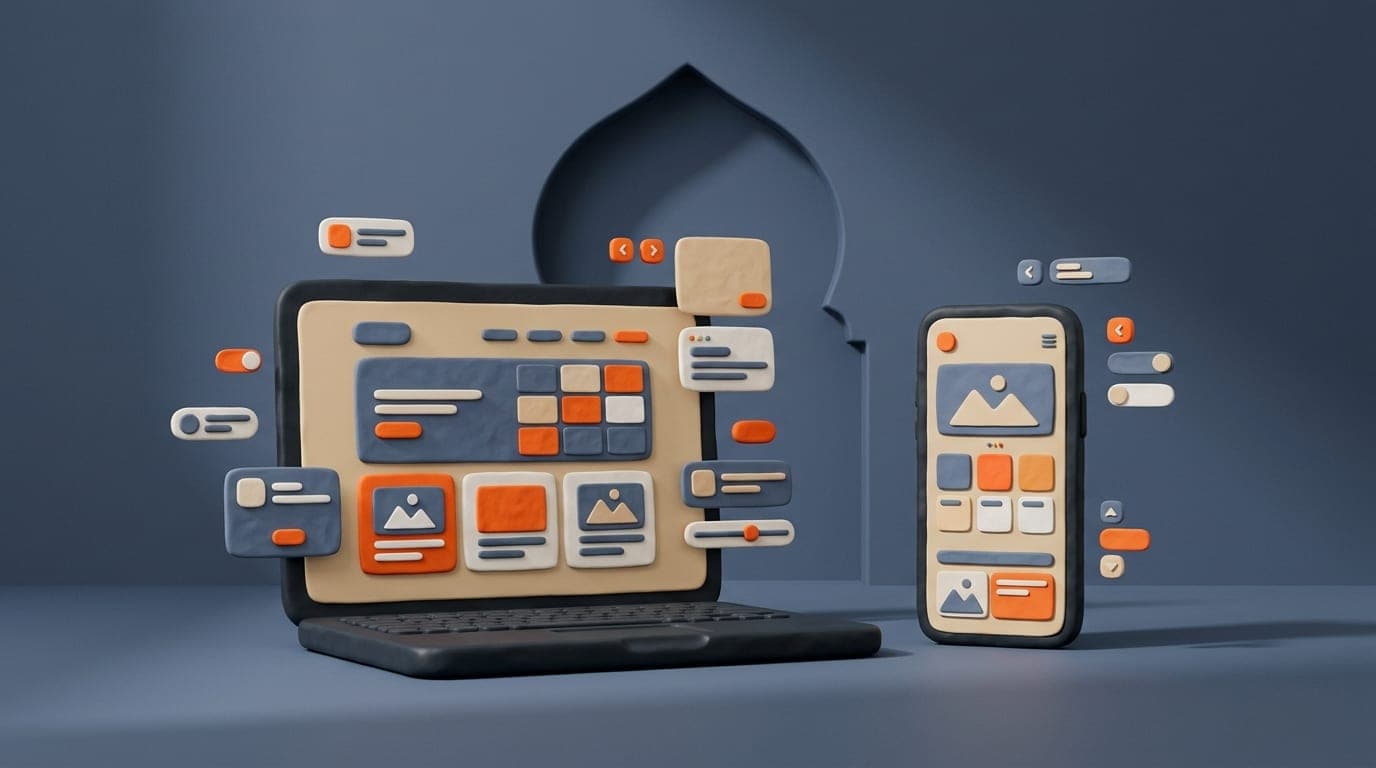
Forms, dropdowns, carousels and Arabic keyboards behave differently across devices. An Arabic version is validated on iPhone and Android, not just on a desktop screen.
In short
A good Arabic version is not a translation layer: it is a second version of the website, designed with the same care as the first. That is exactly what I offer, see Arabic website design.
- #Arabic website
- #RTL
- #bilingual website
- #multilingual SEO
Written by YassineGraphic designer and web / SEO consultant in Casablanca.